
How to calculate weight of metals
Precision industrial weight analysis for engineering and logistics.
Metal Weight Analysis: Technical Manual
Foundational principles, geometric formulas, and user guidance.
1. Introduction to the Metal Weight Calculator
This comprehensive manual provides the technical documentation and user guidance for the Multi-Profile Metal Weight Calculator featured on techfolio.in. This tool is engineered to provide high-precision weight estimates for six essential structural shapes across three primary industrial metals.
The TechFolio Metal Weight Calculator is a digital engineering tool designed to bridge the gap between architectural planning and material procurement. In the fields of construction, manufacturing, and DIY fabrication, knowing the exact weight of a component is critical for:
- Structural Integrity: Ensuring supports can handle the dead load of the materials.
- Logistics: Calculating shipping costs and vehicle load limits.
- Cost Estimation: Metals are frequently sold by weight (per kg or tonne); accurate calculations prevent budget overruns.
2. Core Scientific Principles
The calculator operates on the fundamental physical formula relating mass ($m$), volume ($V$), and density ($\rho$):
Material Densities (ρ)
The calculator uses standardized density values for the three most common industrial metals. Variations can occur based on specific alloy compositions.
| Metal | Density (kg/m³) | Characteristics |
|---|---|---|
| Mild Steel (MS) | 7,850 | Most common structural metal; high strength. |
| Stainless Steel (SS) | 8,000 | Chromium added for corrosion resistance. |
| Aluminium | 2,710 | 1/3 weight of steel; used for weight-saving. |
3. Shape Selection and Geometric Formulas
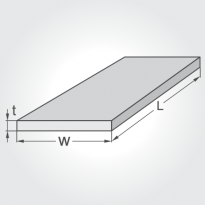
3.1. Sheets and Plates
V = L × W × T
Used for floor plating and enclosure panels.
3.2. Solid Round Bars
V = π × (D/2)² × L
Used for shafts and axles.
3.3. Round Tubes
V = [π × (OD/2)² - π × (ID/2)²] × L
Internal diameter (ID) automatically handled.
3.4. Square & Rectangular Tubes
V = [(W × H) - ((W - 2T) × (H - 2T))] × L
Used for frames and structural supports.
3.5. Equal L Angles (Angle Iron)
V = [(W × T) + (W - T) × T] × L
Double-counting of the corner is mathematically avoided.
4. Step-by-Step User Instructions
Step 1: Material Selection - Select your metal type first. This sets the density constant.
Step 2: Shape Selection - Click on the icon representing the profile you are using. The input fields will dynamically update.
Step 3: Unit Selection - Choose the correct unit (mtr, cm, mm) for each individual dimension entered.
Step 4: Parameter Entry - Enter dimensions from calipers or tape measure. For Tubes, measure Wall Thickness ($T$).
Step 5: Analysis - View Total Mass and Weight per Meter result.
5. Technical Accuracy and Tolerances
Manufacturers often have a thickness tolerance (e.g., ±10%). Additionally, square tubes and L-angles have slightly rounded corners (fillets) in reality. Our calculator assumes perfectly sharp 90-degree corners, meaning the result might be 1% to 3% higher than the actual physical weight on a scale.
6. Interpretation and Troubleshooting
- Logistics Planning: Use the "Weight per Meter" to estimate shipping load limits.
- Cost Audit: Before approving a quote, verify the vendor's weight calculations.
- Edge Cases: If your shape isn't listed (e.g., a U-channel), break it down into multiple "Sheets."